内容简介
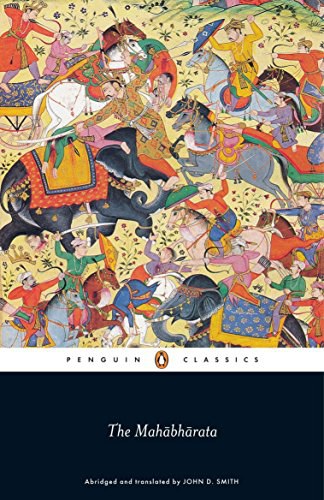
The Mahabharata is one of the two major Sanskrit epics of ancient India. It is of immense importance to the culture of the Indian subcontinent, and is a major text of Hinduism. Its discussion of human goals (artha or 'purpose', kama or 'pleasure', dharma or 'duty', and moksha or 'liberation') takes place in a long-standing tradition, attempting to explain the relationship of the individual to society and the world (the nature of the 'Self') and the workings of karma.
John D. Smith was born in Nottingham in 1946. He attended Magdalene College, Cambridge, where he read Sanskrit and Hindi. In the early 1970s he held a research fellowship at Christ’s College, Cambridge; this was followed by nine years as lecturer in Sanskrit at the School of Oriental and African Studies in the University of London. In 1984 he returned to Cambridge, where he is ...
作者简介
Vyasa (; Sanskrit: व्यास, lit. 'compiler, arranger', IAST: Vyāsa) is a rishi (sage) with a prominent role in most Hindu traditions. He is also known as Veda Vyasa (Sanskrit: वेदव्यास, lit. 'the one who classified the Vedas', IAST: Vedavyāsa) or Krishna Dvaipayana (Sanskrit: कृष्णद्वैपायन, IAST: Kṛṣṇadvaipāyana). Traditionally regarded as the author of the epic Mahābhārata, Vyasa also plays a prominent role as a character. He is also regarded by the Hindu traditions to be the compiler of the mant
点击查看全部下载链接(含网盘地址及提取码)